
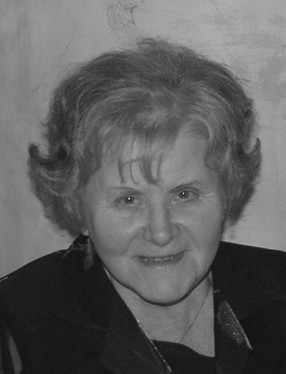
It is with great sadness and regret that we announce the passing of
Professor Elżbieta Romanowska , PhD, DSc
Elżbieta Romanowska was born in 1928 in Lviv. In 1946, she moved with her family to Wrocław. Between 1947 and 1951, she studied at the Faculty of Mathematics, Physics, and Chemistry at the University of Wrocław, obtaining a master’s degree in chemistry in 1952.
After graduating, between 1951 and 1955, she worked as an assistant at the Department of Physiological Chemistry at the Medical Academy in Wrocław, in the team of Prof. Tadeusz Baranowski, and then continued her scientific work under the supervision of Prof. Baranowski at the Department of Biochemistry of the newly established Hirszfeld Institute of Immunology and Experimental Therapy Polish Academy of Sciences, located on Chałubińskiego Street. During that period, Professor Romanowska conducted research on the use of polarography to determine the concentration of potassium and sodium in plasma and 17-ketosteroids in urine and human serum in healthy people and patients treated with adrenocorticotropic hormone. From 1955, she was involved in research on the immunochemistry of M and N group substances derived from human blood cells, which was a innovative direction of research carried out at the Institute. During that period, a method for isolating and purifying M and N antigens from human blood cells was developed and their chemical composition was studied.
In 1960, she obtained a doctorate in natural sciences with a dissertation entitled “Research on the chemical structure of M and N group substances.” From 1960 to 1969, she continued her work as an assistant professor at the Department of Biochemistry IIET PAS. As a British Council scholarship holder, she completed an eleven-month research internship in London in 1961-1962 at the Lister Institute of Preventive Medicine, which still exists today and has over 125 years of history. During her internship, she worked in the Biochemistry Department under the supervision of Prof. Walter T.J. Morgan, also collaborating with Winifred Watkins, PhD on the fractionation of Trichomonas foetus enzymes using chromatographic methods. At that time, she learned about the methods used in this laboratory in immunochemical studies of AB0 group antigens and Lewis (Le) antigens. In 1968, Professor Romanowska received the Medical Sciences Award of the Polish Academy of Sciences for a series of works on Shigella bacteria. Her research in this area formed the basis of her habilitation thesis entitled “Chemical basis of antigenic differences between phases I and II of Shigella sonnei” and led to her obtaining a postdoctoral degree in natural sciences in 1969.
Appointed to the position of independent researcher, Professor Romanowska began leading her own research group, taking over in 1973 the formal management of the Laboratory of Microbial Immunochemistry and Vaccines, which still operates at the Institute today. She held this position until 1996 Leading research direction was and still is the structural study of bacterial sugar antigens in the context of biological activity and interaction with the immune system. At that time, the team conducted research on, among other things, the structures and heterogeneity of lipopolysaccharides, including Shigella O antigens, established the connection between the O antigen of Shigella sonnei and the core oligosaccharide of LPS, explained the structural basis for cross-reactions of immune sera with OMP outer membrane proteins in the context of their immunogenicity and the protective role of anti-OMP antibodies, and conducted pioneering research on the common enterobacterial antigen (ECA). Her scientific interests later expanded to include other species of opportunistic bacteria, such as Hafnia alvei and Citrobacter. She has published over 160 scientific papers, building an international brand for Polish Immunochemistry. Professor Elżbieta Romanowska was awarded the title of associate professor in 1980 and full professor in 1986.
As head of the Laboratory of Microbial Immunochemistry and Vaccines she has established a number of prestigious international collaborations. Professor and members of her team have been invited to collaborate with researchers from the Max Planck Institute of Immunology in Freiburg, Stockholm University, and the National Research Council (NRC) in Canada. During that period, the team obtained a three-year grant from the Maria Skłodowska-Curie Fund, as part of Polish-American cooperation, for the training of young research staff and foreign research internships at the above-mentioned research centers. She promoted six doctors, renowned immunochemists who linked their scientific work with the Institute: Prof. Czesław Ługowski, Prof. Andrzej Gamian, Ewa Katzenellenbogen,PhD, Anna Romanowska, PhD, Grażyna Adamus,PhD and Małgorzata Kułakowska,PhD. She was a member of the Immunology Committee of the Polish Academy of Sciences, the Polish Biochemical Society, and the Polish Immunological Society. She was the recipient of the individual Award of the Polish Immunological Society and the Polish Biochemical Society (1975) and twice the Award of the Scientific Secretary of the Polish Academy of Sciences (1973, 1980).
The school of microbial immunochemistry, initiated by Professor Romanowska’s scientific work, continues to exist today. The research traditions are successfully upheld by the Laboratory of Medical Microbiology headed by Prof. Andrzej Gamian and by the Laboratory of Microbial Immunochemistry and Vaccines established by the Professor and headed successively by Prof. Czesław Ługowski (Professor Emeritus of the IIET PAS) and currently by Prof. Jolanta Łukasiewicz.
Professor Elżbieta Romanowska will forever remain in our memory as an outstanding immunochemist and a fair, warm-hearted, and kind Person.
The funeral ceremony will begin on December 1, 2025 (Monday)
at 11:30 a.m. in the chapel at the cemetery on Bujwida Street
We offer our sincere condolences to his family and loved ones.
The management, colleagues, and employees of the
Hirszfeld Institute of Immunology and Experimental Therapy
Polish Academy of Sciences