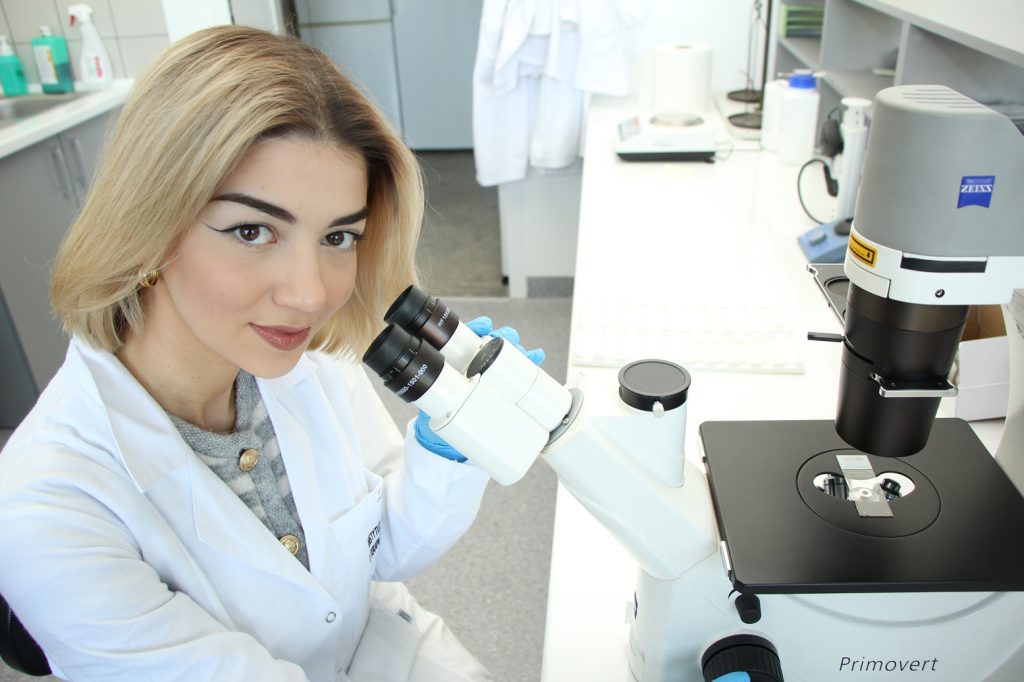
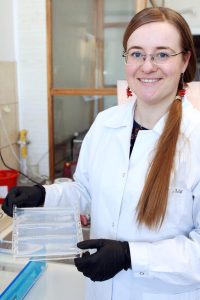
At the Laboratory of Clinical Immunogenetics and Pharmacogenetics (LIKiF), scientific research is conducted with the aim of identifying new markers associated with disease susceptibility and course, response to treatment, and the evaluation of the effectiveness of applied therapies. The laboratory carries out analyses in the fields of human immunology and immunogenetics, including genetic and epigenetic studies – polymorphic variability and gene expression (mRNA, miRNA) – as well as proteomic analyses based on protein level measurements and cytometric panels. Experiments are conducted in vitro (cell lines) and using clinical material obtained from patients with rheumatic diseases (including rheumatoid arthritis and ankylosing spondylitis), hematological diseases (including patients after hematopoietic stem cell transplantation), and oncological diseases (including breast and lung cancer). The research is carried out in collaboration with scientific and clinical centers in Poland and abroad.
Our primary focus is on NK cells and γδ T lymphocytes. We are also working on the implementation of mean telomere length assessment for clinical purposes. Within the framework of the “Immunogenetics of Ageing Working Group,” we conduct international studies addressing issues related to the immunogenetics of aging, including variability in genes encoding HLA and MICA/B molecules, analysis of KIR specificity, and polymorphic variants in the NKG2D and ELOVL2 genes.
Contact
Laboratory Head
Head: prof. dr hab. Katarzyna Bogunia-Kubik – Head of the Laboratory of Clinical Immunogenetics and Pharmacogenetics (LIKiF), https://orcid.org/0000-0001-9744-0376
Director’s biography: Prof. Bogunia-Kubik has over 20 years’ experience in immunogenetics. Her research focuses on transplant immunology/immunogenetics and searching for new markers related to susceptibility and course of disease as well as response to treatment (e.g. rheumatic or haematological disorders), and analysis of issues related to immunogenetics of ageing. The main aspects of her work are HLA and non-HLA polymorphisms studies, and expression of miRNA and other genes coding for proteins involved in regulation of immune response. She has been head of the Laboratory since 2013.
She is currently a member of: HIIET PAS Scientific Council; Wrocław Doctoral School of Institutes of Polish Academy of Sciences Council; Committee for Immunology and Aethiology of Human Infections; European Board of Transplant Immunology (EBTI) of the Division of Transplantation; Management Committee – COST CA17138: Integrated European Network on Chronic Graft Versus Host Disease (cGvHD) – EUROGRAFT;
Board of the Polish Society for Immunogenetics (past president), European Federation for Immunogenetics (EFI Executive Committee; Councillor), Wrocław Branch of the Polish Society of Experimental and Clinical Immunology (president).
Team
Scientific Staff:
- Milena Iwaszko, PhD, Assistant Professor (0000-0002-0728-4603)
- Piotr Łacina, PhD, Eng, Assistant Professor (0000-0002-9659-9403)
- Marta Dratwa-Kuzmin, PhD, Assistant Professor (0000-0003-4077-7538)
- Jagoda Siemaszko, PhD, Assistant (0000-0002-4440-1709)
- Sylwia Biały, MSc, Assistant (0000-0003-1222-4231)
Specialists:
PhD students:
Most important scientific achievements
Laboratory of Clinical Immunogenetics and Pharmacogenetics was founded in 2013. Among our achievements to date is the investigation and documentation of the significance of:
- polymorphic variants of genes encoding classical and non-classical histocompatibility antigens (HLA) and their receptors, as well as the expression of pro-inflammatory cytokines and miRNA molecules, in relation to susceptibility to rheumatic diseases and the effectiveness of biological therapies (anti-TNF and JAK/STAT), as well as the risk of developing complications following hematopoietic cell transplantation;
- the hTERT gene as a marker associated with disease susceptibility, response to treatment, and prognosis in patient groups with acute myeloid leukemia, chronic lymphocytic leukemia multiple myeloma, as well as in women with breast cancer;
- mean telomere length as a potential prognostic indicator in oncology and oncohematology, as well as a biomarker associated with longevity;
- the soluble form of the BSG (CD147) protein in patients’ serum as a potential diagnostic and prognostic marker in multiple myeloma and acute myeloid leukemia;
- changes in surface expression, expression at the mRNA and protein levels, as well as polymorphic variability of genes encoding NK cell receptors (from the NKG2, NCR, and ILT families) and their ligands, in relation to the risk of post-transplant complications in adult patients undergoing allogeneic hematopoietic cell transplantation;
- unconventional γδ T lymphocytes, their functional phenotype, and receptor profile in the course of rheumatic diseases and in response to biological therapy.
Research methods
- analysis of polymorphic variability and gene expression (PCR, RT-PCR, qPCR, VNTR, PCR-SSP, NGS);
- determination of telomere length and telomerase activity;
- analysis of protein levels (ELISA and multiparametric assays using the Luminex platform);
- flow cytometry;
- miRNA profiling;
- in vitro cell cultures;
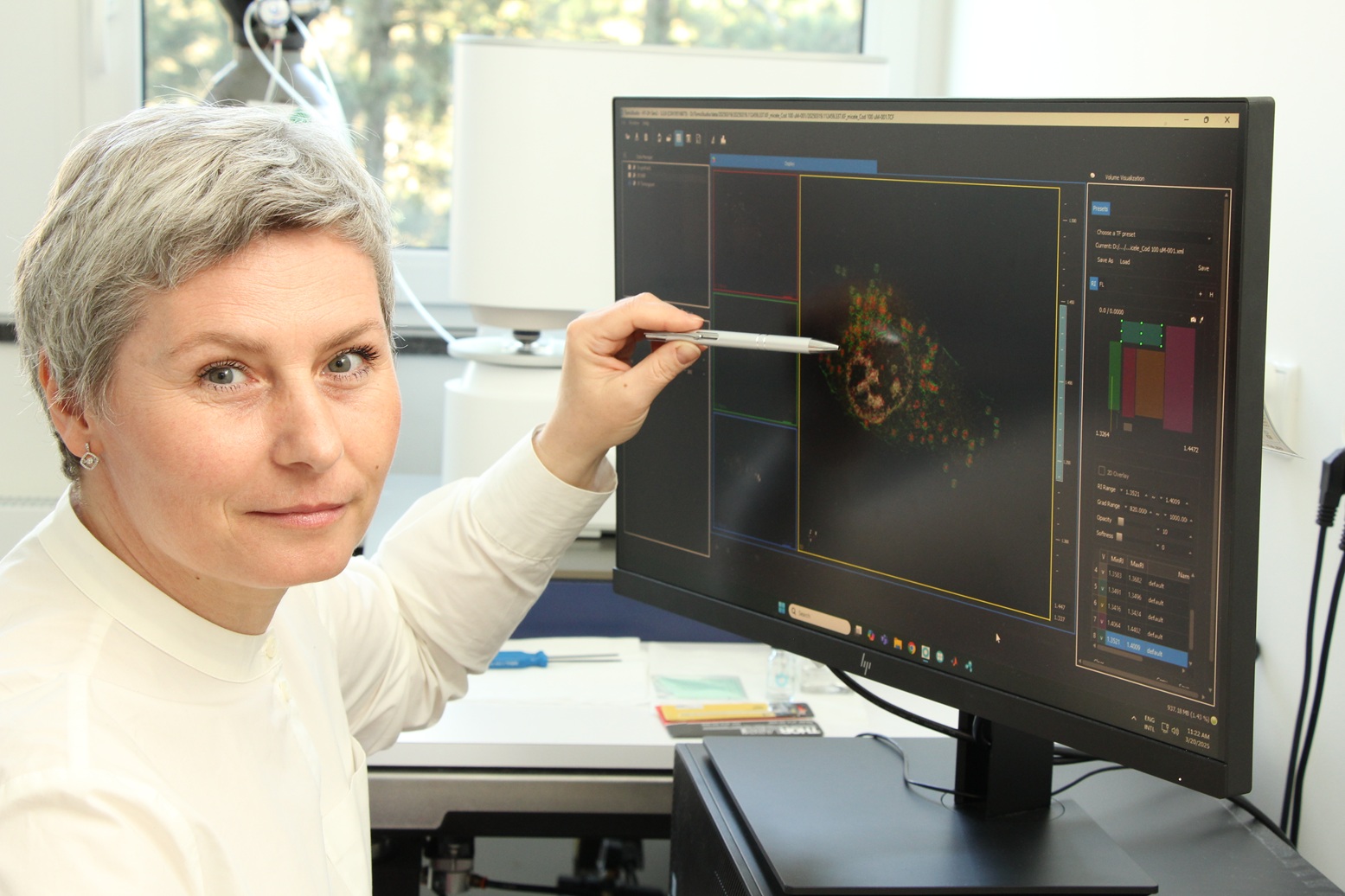
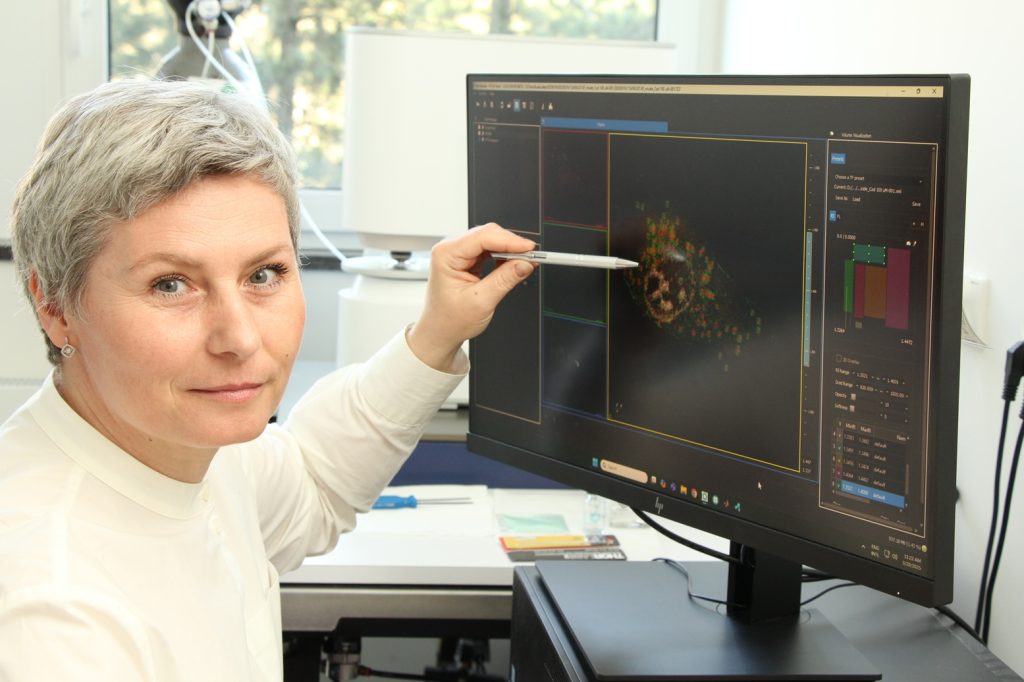
- holotomographic microscopy.
Key equipment
- molecular biology laboratory; PCR systems, qPCR systems, 8-capillary DNA sequencer;
- Luminex 200 fluorescence-laser analyzer;
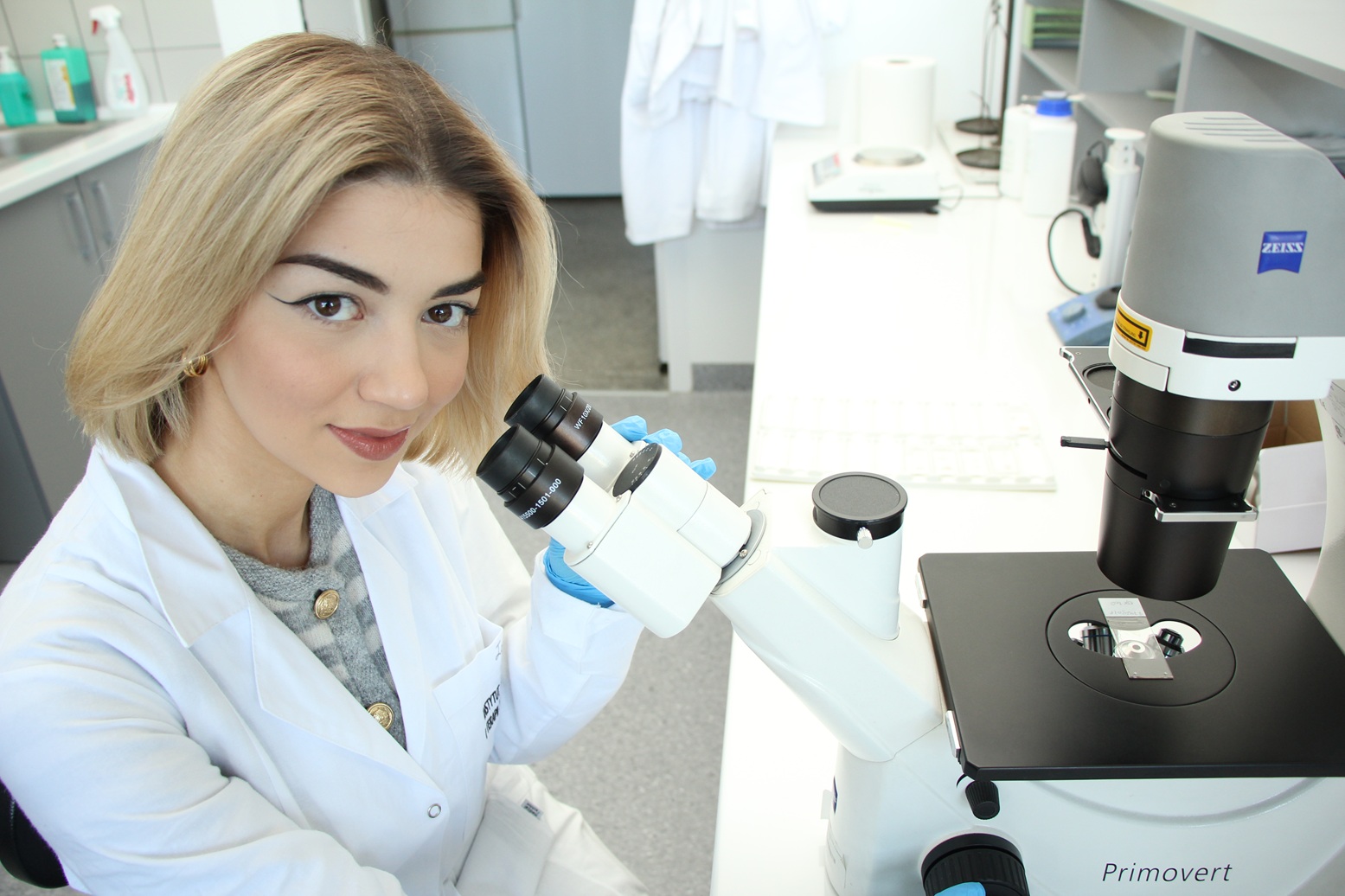
- cell culture laboratory; laminar flow hood, incubator, microscope, flow cytometer;
- workstation for live-cell visualization using digital holotomography with a Tomocube microscope
Most important projects (during the last 10 years)
- „Genetic and functional aspects of NK cell activity during allogeneic hematopoietic stem cell transplantation – the role of NKG2E, NKG2F, KLRG1 receptors and the CD107a molecule”; National Science Centre grant MINIATURA 9 No. 2025/09/X/NZ6/00358 (07.08.2025-06.08.2026); project leader: dr Jagoda Siemaszko.
- „Telomere length of the donor-recipient pair and the immune reconstitution profile in children undergoing allogeneic hematopoietic cell transplantation”; National Science Centre grant MINIATURA 8 Nr:2024/08/X/NZ6/00773 (11.10.2024-10-10.2025); project leader: dr Marta Dratwa-Kuzmin.
- „Effectiveness of innovative therapy with JAK inhibitors in patients with rheumatoid arthritis in relation to γδ T cell receptor and cytokine profile”; National Science Centre grant PRELUDIUM 22 No: 2023/49/N/NZ5/04128 (09.01.2024-08.01.2027); project leader: mgr Sylwia Biały.
- „ Extracellular vesicles derived from patients with rheumatoid arthritis as modulators of NK cell functionality”; National Science Centre grant Opus 24 No: 2022/47/B/NZ3/01980 (06.07.2023-05.07.2027); project leader: prof. dr hab. Katarzyna Bogunia-Kubik.
- „Epigenomic, immunogenetic and proteomic strategies for identification of NK cell determinants of prognostic value for patients undergoing allogeneic transplantation of hematopoietic stem cells – a multicentre study”; National Science Centre grant “Opus” No: 2018/31/B/NZ2/03065 (03.10.2019-02.10.2022); project leader: prof. Katarzyna Bogunia-Kubik
- „Determining the role of basigin in multiple myeloma and acute myeloid leukaemia development”; National Science Centre grant “Preludium” No: 2018/29/N/NZ5/02022 (28.01.2019-27.01.2022); project leader: Piotr Łacina, MSc, Eng.
- „New compounds with anti-cancer activity that disrupt telomere functions” – Targettelo, National Centre for Research and Development grant No: STRATEGMED3/306853/9/NCBR/2017 (17.05.2017-16.05.2021); project leader: prof. Maciej Bagiński; subtask leader: prof. Katarzyna Bogunia-Kubik: Analysis of genetic variability within the telomerase catalytic unit. Workpakage 2: Determination of molecular properties of investigated telomeric systems.
- „Looking for biomarkers of rheumatic diseases – comprehensive study of metabolomics profile, polymorphisms and expression of IL-23/Th17 pathway genes and miRNA molecules”; National Science Centre grant “Opus“ No: 2016/21/B/NZ5/01901 (07.02.2017-06.02.2021); project leader: prof. Katarzyna Bogunia-Kubik
- „Looking for biomarkers related to rheumatoid arthritis – continuation of preliminary studies”; KNOW grant No: 39/2015/KNOW/IITD (16.10.2015-15.10.2016); project leader: prof. Katarzyna Bogunia-Kubik
- „Initial studies on the immune response in patients with rheumatoid arthritis with different serological status”; KNOW grant No: 102/2016/KNOW IITD (5.10.2016-4.01.2018); project leader: dr Barbara Wysoczańska
- „The role of miRNA in regulating fibrosis in systemic sclerosis”; Foundation for Polish Science grant “Homing Plus“ No: Homing Plus/2013-8/4 (1.07.2014-31.12.2015); project leader: dr Marzena Ciechomska
- „Immunogenetic background of haematopoietic stem cells release from bone marrow into peripheral circulation in response to granulocyte colony stimulating factor (G-CSF) treatment”; National Science Centre grant “Preludium“ No: 2012/07/N/NZ6/02971 (17.06.2013-17.02.2018); project leader: Katarzyna Gębura, MSc, Eng.
- „ The role of polymorphisms and expressions of the receptors from the CD94/NKG2 family and the HLA-E molecule in etiopathogenesis of the rheumatoid arthritis”; National Science Centre grant “Preludium“ No: 2012/05/N/NZ5/02607 (21.02.213-20.02.2016); project leader: Milena Iwaszko, MSc
Selected publications
- Łacina P., Crossland R.E., Siemaszko J., Szeremet A., Majcherek M., Czyż A., Sobczyk-Kruszelnicka M., Fidyk W., Solarska I., Nasiłowska-Adamska B., Skowrońska P., Bieniaszewska M., Tomaszewska A., Basak G.W., Giebel S., Wróbel T., Bogunia-Kubik K.: miR-302d-3p expression and genotype are associated with CMV replication after allogeneic haematopoietic stem cell transplantation. Hum Immunol, 2025, 86(6):111599 (doi: 10.1016/j.humimm.2025.111599),
- Dratwa-Kuzmin M., Lacina P., Wysoczanska B., Kilinska D., Siemaszko J., Sobczyk-Kruszelnicka M., Fidyk W., Solarska I., Nasiłowska-Adamska B., Skowronska P., Bieniaszewska M., Tomaszewska A., Basak G., Giebel S., Bogunia-Kubik K.: Telomere length and telomerase reverse transcriptase gene polymorphism as potential markers of complete chimerism and GvHD development after allogeneic haematopoietic stem cell transplantation. J Cancer Res Clin Oncol, 2025, 151(3):109 (doi: 10.1007/s00432-025-06160-7),
- Siemaszko, J., Łacina, P., Szymczak, D., Szeremet, A., Majcherek, M., Czyż, A., Sobczyk-Kruszelnicka, M., Fidyk, W., Solarska, I., Nasiłowska-Adamska, B., Skowrońska, P., Bieniaszewska, M., Tomaszewska, A., Basak, G. W., Giebel, S., Wróbel, T., Bogunia-Kubik, K.: ILT-2 and ILT-4 expression and donor genotype as factors associated with HSCT outcome. Clin Immunol, 2025, 281:110605 (doi: 10.1016/j.clim.2025.110605),
- Smardz, J., Martynowicz, H., Dratwa-Kuzmin, M., Wojakowska, A., Gac, P., Bogunia-Kubik, K., Wieckiewicz, M. The importance of dopamine levels and single-nucleotide polymorphism within COMT, DRD1 and DRD2 genes in obstructive sleep apnoea. Annals of medicine, 2025, 57(1), 2548386, (doi.org/10.1080/07853890.2025.2548386),
- Biały, S., Bogunia-Kubik, K.: Uncovering the mysteries of human gamma delta T cells: from origins to novel therapeutics. Front Immunol. 2025 Apr 10;16:1543454. (doi:10.3389/fimmu.2025.1543454),
- Pietras P.J., Chaszczewska-Markowska M., Ghete D., Tyczewska A., Bąkowska-Żywicka K.: Saccharomyces cerevisiae recovery from various mild abiotic stresses: Viability, fitness, and high resolution three-dimensional morphology imaging. Fungal Genet Biol, 2025, 178:103975, (doi:10.1016/j.fgb.2025.103975),
- Biały S., Iwaszko M., Świerkot J., Kolossa K., Wielińska J., Jeka S., Bogunia-Kubik K.: Genetic variability of three common NK and γδ T cell receptor genes (FCγ3R, NCR3, and DNAM-1) and their role in Polish patients with rheumatoid arthritis and ankylosing spondylitis. Immunol Res, 2024, 72(4):614-625 (doi: 10.1007/s12026-024-09488-3),
- Nihtilä, J., Penna, L., Salmenniemi, U., Itälä-Remes, M., Crossland, R.E., Gallardo, D., Bogunia-Kubik, K., Lacina, P., Bieniaszewska, M., Giebel, S., Karjalainen, K., Jahan, F., Kerkelä, E., Hyvärinen, K., Koskela, S., Ritari, J., Partanen, J.: Effect of NK cell receptor genetic variation on allogeneic stem cell transplantation outcome and in vitro NK cell cytotoxicity. Sci Rep. 2024 Nov 6;14(1):26988. (doi: 10.1038/s41598-024-78619-5),
- Dratwa-Kuzmin, M., Hadra, B.A., Oguz, F., Ogret, Y., Constantinescu, I., Apostol, D., Talangescu, A., Constantinescu, A.E., Maruntelu, I., Kościńska, K., Lukanov, T., Naumova, E., Bogunia-Kubik, K.: Telomere Length, HLA, and Longevity-Results from a Multicenter Study. Int J Mol Sci. 2024 Aug 30;25(17):9457. (doi: 10.3390/ijms2517945),
- Gavriilidi, I.K., Wielińska, J., Bogunia-Kubik, K.: Updates on the Pathophysiology and Therapeutic Potential of Extracellular Vesicles with Focus on Exosomes in Rheumatoid Arthritis. J Inflamm Res. 2024 Jul 19;17:4811-4826. (doi: 10.2147/JIR.S465653),
- Siemaszko J., Ussowicz M., Rybka B., Ryczan-Krawczyk R., Kałwak K., Bogunia-Kubik K.: The impact of NKG2A and NKG2D receptors and HLA-E and MICA ligands polymorphisms on post-transplant complications after paediatric allogeneic HSCT: a single-centre experience. Front Genet, 2023, 14:1186123 (doi: 10.3389/fgene.2023.1186123),
- Łacina P., Crossland R.E., Wielińska J., Czyż A., Szeremet A., Ussowicz M., Wróbel T., Dickinson A.M., Bogunia-Kubik K.: Differential expression of miRNAs from extracellular vesicles in chronic graft-versus-host disease: A preliminary study. Adv Clin Exp Med, 2023, 32(5):539-544 (doi: 10.17219/acem/155373),
- Gail, L.M., Schell, K.J., Łacina, P., Strobl, J., Bolton, S.J., Steinbakk Ulriksen, E., Bogunia-Kubik, K., Greinix, H., Crossland, R.E., Inngjerdingen, M., Stary, G.: Complex interactions of cellular players in chronic Graft-versus-Host Disease. Front Immunol. 2023 Jun 26;14:1199422. (doi: 10.3389/fimmu.2023.1199422),
- Sánchez-Maldonado, J.M., Cáliz, R., López-Nevot, M.Á., Cabrera-Serrano, A.J., Moñiz-Díez, A., Canhão, H., Ter Horst, R., Quartuccio, L., Sorensen, S.B., Glintborg, B., Hetland, M.L., Filipescu, I., Pérez-Pampin, E., Conesa-Zamora, P., Swierkot, J., den Broeder, A.A., De Vita, S., Petersen, E.R.B., Li, Y., Ferrer, M.A., Escudero, A., Netea, M.G., Coenen, M.J.H., Andersen, V., Fonseca, J.E., Jurado, M., Bogunia-Kubik, K., Collantes, E., Sainz, J.: Validation of GWAS-Identified Variants for Anti-TNF Drug Response in Rheumatoid Arthritis: A Meta-Analysis of Two Large Cohorts. Front Immunol. 2021 Oct 27;12:672255. (doi: 10.3389/fimmu.2021.672255),
- Bogunia-Kubik, K., Wojtowicz, W., Swierkot, J., Mielko, K.A., Qasem, B., Wielińska, J., Sokolik, R., Pruss, Ł., Młynarz, P.: Disease Differentiation and Monitoring of Anti-TNF Treatment in Rheumatoid Arthritis and Spondyloarthropathies. Int J Mol Sci. 2021 Jul 9;22(14):7389. (doi: 10.3390/ijms22147389),
- Dratwa, M., Wysoczańska, B., Łacina, P., Kubik, T., Bogunia-Kubik, K.: TERT-Regulation and Roles in Cancer Formation. Front Immunol. 2020 Nov 19;11:589929. (doi: 10.3389/fimmu.2020.589929),
- Iwaszko M., Świerkot J., Dratwa M., Wysoczańska B., Korman L., Bugaj B., Kolossa K., Jeka S., Wiland P., Bogunia-Kubik K.: Association of MICA-129Met/Val polymorphism with clinical outcome of anti-TNF therapy and MICA serum levels in patients with rheumatoid arthritis. Pharmacogenomics J., 2020 (https://doi.org/10.1038/s41397-020-0164-3).
- Gębura K., Butrym A., Chaszczewska-Markowska M., Wróbel T., Kuliczkowski K., Bogunia-Kubik K.: G-CSF administration favours SDF-1 release and activation of neutrophils and monocytes in recipients of autologous peripheral blood progenitor cells. Cytokine, 2019, 116: 38-47 (https://doi.org/10.1016/j.cyto.2018.12.011).
- Ciechomska M., Bonek K., Merdas M., Zarecki P., Swierkot J., Gluszko P., Bogunia-Kubik K., Maslinski W.: Changes in MiRNA-5196 Expression as a Potential Biomarker of Anti-TNF-α Therapy in Rheumatoid Arthritis and Ankylosing Spondylitis Patients. Arch Immunol Ther Exp (Warsz), 2018, 66(5): 389-397 (https://doi.org/10.1007/s00005-018-0513-y).
- Łacina P., Butrym A., Mazur G., Bogunia-Kubik K.: BSG and MCT1 Genetic Variants Influence Survival in Multiple Myeloma Patients. Genes (Basel), 2018, 9(5): 226 (https://doi.org/10.3390/genes9050226).
- Iwaszko M., Świerkot J., Kolossa K., Jeka S., Wiland P., Bogunia-Kubik K.: Influence of NKG2D Genetic Variants on Response to Anti-TNF Agents in Patients with Rheumatoid Arthritis. Genes (Basel), 2018, 9(2): 64 (https://doi.org/10.3390/genes9020064).