Overview of the Laboratory of Tumor Immunology
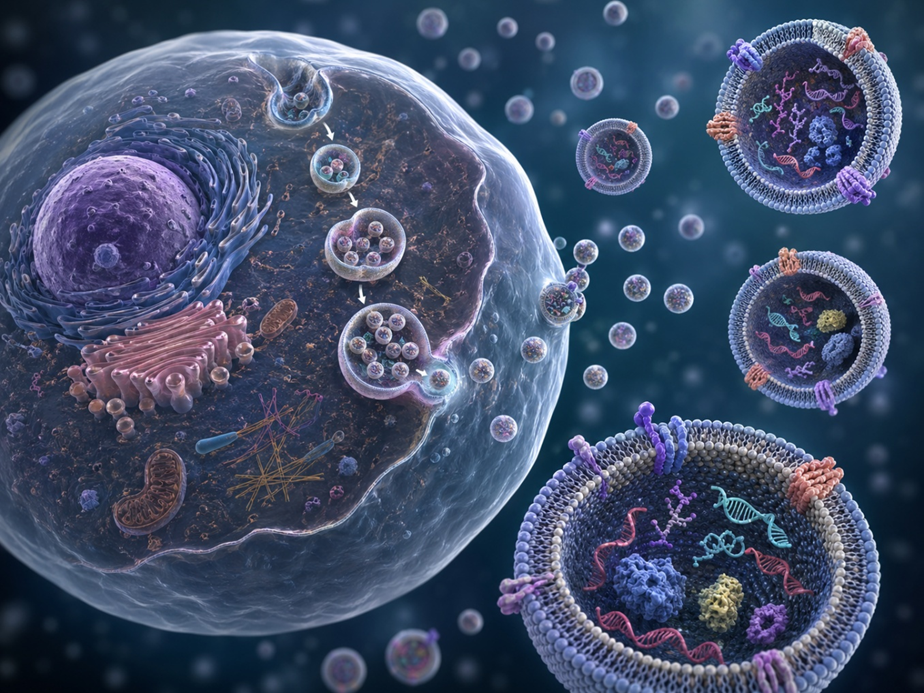
The Laboratory of Tumor Immunology conducts interdisciplinary research at the interface of immunology, cell biology, genetic engineering, and immuno-oncology. Its activities focus on elucidating the mechanisms that regulate immune responses within the tumor microenvironment and on developing advanced, personalized strategies for cancer immunotherapy and diagnostics. Particular emphasis is placed on extracellular vesicles (EVs) as mediators of communication between tumor and non-malignant cells. In parallel, genetic engineering strategies are being developed to generate EV-based platforms with defined biological activities. Depending on the type of modification, EVs are designed either as nanoadjuvants that enhance the efficacy of existing anticancer therapies or as platforms exerting direct cytotoxic activity against cancer cells.
Research areas:
- design and characterization of engineered EVs delivering immunostimulatory cytokines or inhibitors of immunosuppressive factors, and evaluation of their capacity to induce antitumor immune responses;
- identification and characterization of novel tumor antigen formulations supporting the development of personalized dendritic cell-based immunotherapy;
- investigation of extracellular vesicles released by genetically engineered NK cells with enhanced cytotoxic activity and selectivity toward cancer cells;
- investigation of the molecular mechanisms underlying vascular normalization and immunonormalization in tumors, including the contribution of endothelial cell-derived extracellular vesicles to the regulation of these processes;
- analysis of the molecular mechanisms regulating immune checkpoint expression in tumor and immune cells, together with the identification of predictive biomarkers of immunotherapy efficacy and the development of treatment resistance.
Laboratory Head

Acting Head: Joanna Rossowska, DSc, Professor at IITD PAS (ORCID: 0000-0002-3682-7160)
Dr. hab. Joanna Rossowska graduated from the Faculty of Biotechnology at Wrocław University of Science and Technology. Since 2004, she has been affiliated with the Institute of Immunology and Experimental Therapy, Polish Academy of Sciences. In 2009, she obtained her PhD in biological sciences based on a dissertation investigating the application of genetically engineered dendritic cells in cancer immunotherapy. She expanded her research experience during scientific visits to the Centre de Biophysique Moléculaire, CNRS, in Orléans, France, and the Institute of Molecular Genetics of the Czech Academy of Sciences in Prague, Czech Republic, strengthening her expertise in tumor immunology and translational oncology. In 2019, she obtained her habilitation in the discipline of medical and health sciences. Her research focuses on immuno-oncology and the application of genetic engineering to develop novel immunotherapeutic strategies. In recent years, her work has concentrated on extracellular vesicles as biologically active therapeutic platforms and as biomarkers for cancer diagnosis and treatment monitoring. Her research combines genetic engineering, functional analyses of immune responses, three-dimensional in vitro models, preclinical in vivo models, and advanced flow cytometry techniques to investigate mechanisms of action and evaluate the efficacy of anticancer therapies.
Team
Secretary:
Scientific Staff:
PhD Students:
- mgr Michalina Pęcherz
- mgr Anas Waer-Asea
Most important scientific achievements
- Identification and characterization of the immunomodulatory potential of tumor-derived extracellular vesicles engineered to overexpress IL-12, IL-18, and shRNA targeting TGF-β1, including their capacity to activate dendritic cells and to induce a tumor antigen-specific, Th1-type anti-tumor immune response.
- Evaluation of the efficacy of an immunotherapy strategy employing viral vectors designed to silence the expression of the immunosuppressive cytokines TGF-β1 and IL-10 within the tumor microenvironment.
- Characterization tumor cell responses to pulsed electric field treatment and evaluation of its capacity to induce immunogenic cell death.
- Implementation of advanced multiparameter flow cytometry approaches to assess immune checkpoint expression as well as the phenotype and functional activity of effector cells.
- Development of preclinical models to investigate interactions between tumor cells, endothelial cells, and the immune system in the context of anti-cancer therapies.
Research methods
The team employs advanced methods in cell biology, molecular biology, and immunology, including:
- Multiparameter flow cytometry to analyze the activity and phenotype of immune cells in in vitro and ex vivo systems.
- Methods for the isolation, characterization, and functional analysis of extracellular vesicles, including NTA, TEM, flow cytometry, and Western blotting.
- Proliferation, cytotoxicity, and effector-cell activation assays, as well as studies of interactions among tumor cells, endothelial cells, and the immune system.
- Advanced 3D cell culture models to investigate intercellular communication, angiogenesis, and responses to treatment.
- Preclinical tumor models to assess the efficacy and mechanisms of action of novel immunotherapy strategies.
- Imaging analyses (confocal and fluorescence microscopy) and molecular assays (qPCR, ELISA).
- Bioinformatic and multidimensional analyses of cytometric, transcriptomic, and proteomic datasets.
Key equipment
- BD LSRFortessa flow cytometer
- BD FACSAria cell sorter
- Cell culture equipment (ESCO, Thermo Scientific), including laminar flow cabinets, CO₂ incubators, an incubator with adjustable oxygen concentration, and a refrigerated laboratory centrifuge
- Molecular analysis equipment, including a PCR thermal cycler, a NanoDrop spectrophotometer, and an ELISA plate reader
Most important projects (during the last 10 years)
- “Next-Generation Exosome Therapy: Modified NK Cell–Derived Vesicles for Targeted Anti-Cancer Treatment.” NCN SONATINA 9 2025/56/C/NZ6/00491. Project period: 12 September 2025 – 11 September 2028.
- “Modified Tumor-Derived Exosomes as Carriers of Molecules Modulating the Tumor Microenvironment.” NCN SONATA BIS 8 2018/30/E/NZ5/00711. Project period: 25 April 2019 – 24 April 2025.
- “Highly Cytotoxic Extracellular Vesicles Derived from Engineered NK Cells as a Promising Tool for Targeted Cancer Immunotherapy — Establishment of an NK Cell Line.” NCN MINIATURA 8 2024/08/X/NZ5/00903. Project period: 11 October 2024 – 10 October 2025.
- “Role of Ultrashort Electric Pulses in Inducing Oxidative Stress and Evaluation of the Anti-Cancer Potential of Nanosecond Pulsed Electric Field Electroporation (nsPEF) in Colorectal Cancer: In Vitro and In Vivo Models.” NCN SONATA BIS 6 2016/22/E/NZ5/00671. Project period: 20 April 2017 – 19 April 2022.
- “Immune Checkpoints in Non–Small Cell Lung Cancer: Genetic and Epigenetic Mechanisms Regulating mRNA and Protein Expression.” NCN OPUS 17 2019/33/B/NZ5/03029. Project period: 2020 – 2025.
Selected publications
- Rossowska J, Nawrocka D, Szermer-Olearnik B, Pęcherz M, Waer-Asea A, Karpiński P, Tracz M, Milczarek M. Extracellular vesicles from IL-18-overexpressing and/or TGF-β1-deprived tumor cells as an immunogenic antigen source for next-generation DC vaccines. J Control Release. 2026 May 10;393:114771.
- Radzevičiūtė-Valčiukė E, Želvys A, Malyško V, Mickevičiūtė-Zinkuvienė E, Malakauskaitė P, Lekešytė B, Gečaitė J, Zinkevičienė A, Kašėta V, Kulbacka J, Rossowska J, Novickij V. Evaluation of unipolar and bipolar nanosecond pulses for calcium electrochemotherapy and immune response. Front Immunol. 2026 Apr 20;17:1805130.
- Węgierek-Ciura K, Szczygieł A, Rudawska A, Mierzejewska J, Rossowska J, Szermer-Olearnik B, Świtalska M, Goszczyński TM, Pajtasz-Piasecka E. Co-delivery of IL-12/IL-15/IL-18 engineered DC vaccines with anti-IL-10R and nanoconjugated methotrexate in melanoma. Front Immunol. 2026 Mar 2;17:1773836. doi: 10.3389/fimmu.2026.1773836.
- Rembiałkowska N, Rossowska J, Novickij V, Łapińska Z, Saczko J, Kulbacka J. Time-dependent stress responses determine bleomycin electrochemotherapy efficacy in drug-resistant breast Cancer cells. Bioelectrochemistry. 2026 Dec;172:109372. doi: 10.1016/j.bioelechem.2026.109372.
- Rossowska J, Anger N, Węgierek K, Szczygieł A, Mierzejewska J, Milczarek M, Szermer-Olearnik B, Pajtasz-Piasecka E. Antitumor potential of extracellular vesicles released by genetically modified murine colon carcinoma cells with overexpression of interleukin-12 and shRNA for TGF-β1. Front Immunol. 2019 Feb 13; 10:211.
- Rossowska J, Anger N, Szczygieł A, Mierzejewska J, Pajtasz-Piasecka E. Reprogramming the murine colon cancer microenvironment using lentivectors encoding shRNA against IL-10 as a component of a potent DC-based chemoimmunotherapy. J Exp Clin Cancer Res. 2018 Jun 28; 37(1):126.
- Rossowska J, Anger N, Szczygieł A, Mierzejewska J, Pajtasz-Piasecka E. Intratumoral lentivector-mediated TGF-β1 gene downregulation as a potent strategy for enhancing the antitumor effect of therapy composed of cyclophosphamide and dendritic cells. Front Immunol. 2017 Jun 30; 8:713.
- Rossowska J, Pajtasz-Piasecka E, Anger N, Wojas-Turek J, Kicielińska J, Piasecki E, Duś D. Cyclophosphamide and IL-12-transduced DCs enhance the antitumor activity of tumor antigen-stimulated DCs and reduce Tregs and MDSCs number. J Immunother. 2014 Nov-Dec; 37(9):427.
- Rossowska J, Anger N, Kicielińska J, Pajtasz-Piasecka E, Bielawska-Pohl A, Wojas-Turek J, Duś D.Temporary elimination of IL-10 enhanced the effectiveness of cyclophosphamide and BMDC-based therapy by decrease of the suppressor activity of MDSCs and activation of antitumour immune response. Immunobiology. 2015 Mar; 220(3):389.