
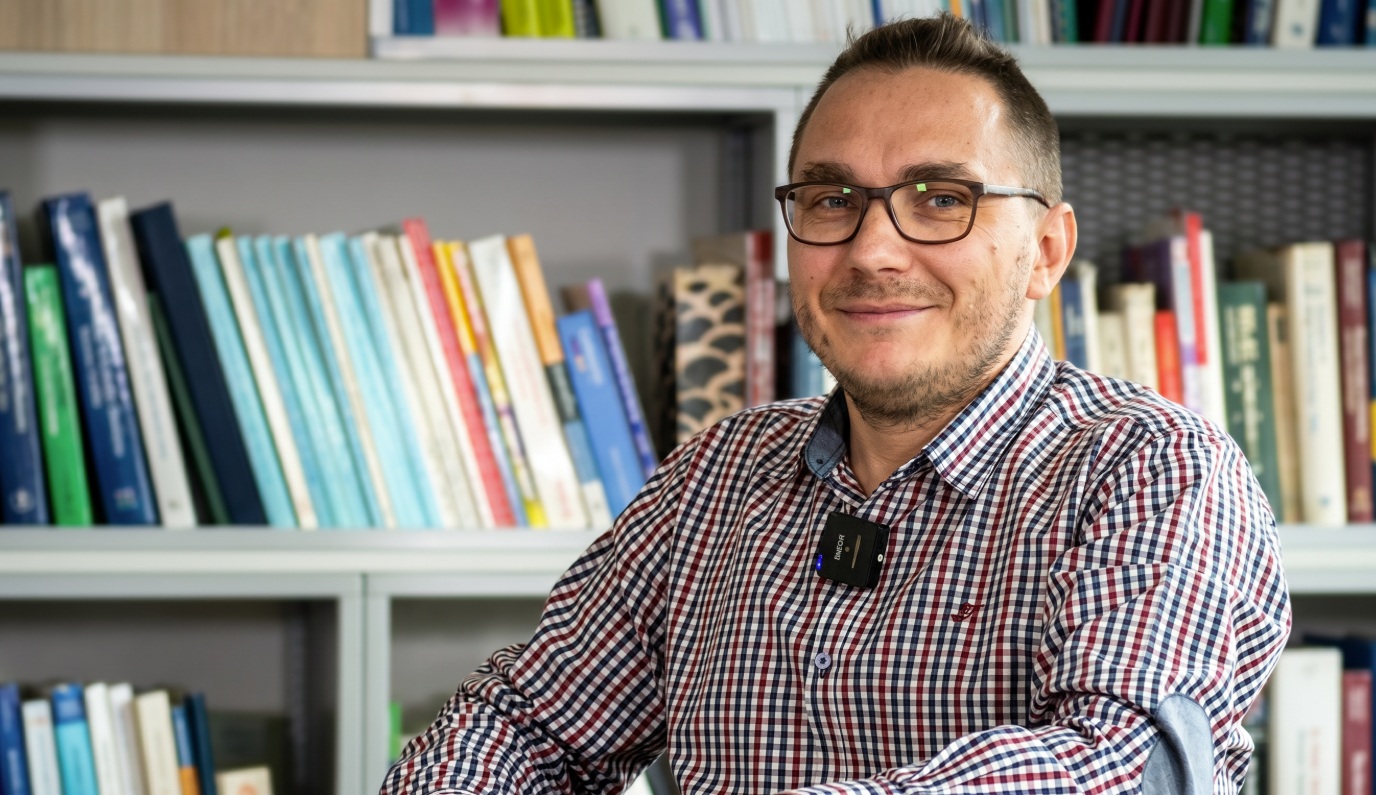
Mateusz Psurski, PhD, Eng., is a researcher who has been affiliated for many years with the Ludwik Hirszfeld Institute of Immunology and Experimental Therapy of the Polish Academy of Sciences in Wrocław, where he is pushing the boundaries of modern experimental oncology and advanced preclinical research.
As a qualified expert in in vitro and in vivo research, he is a key contributor to numerous grant-funded projects, supported by organisations such as the National Science Centre, the National Centre for Research and Development, the Medical Research Agency and the Polish Agency for Enterprise Development. In his research, he focuses particularly on innovative combination therapies. He seeks synergies between conventional drugs and naturally occurring bioactive substances, such as isothiocyanates. He also works on innovative targeted drug delivery systems – including immunoliposomes – aiming to maximise the efficacy of anticancer therapies whilst minimising their toxicity to the body.
He honed his scientific skills, backed by over fourteen years’ experience working with animal models, at leading European centres. Of key importance to the development of his unique expertise in modern preclinical imaging (including advanced small animal ultrasonography) were research placements at the renowned Centre for Advanced Preclinical Imaging (CAPI) at Charles University in Prague, undertaken as part of the Erasmus+ programmes and the M. Bekker Scholarship (National Agency for Academic Exchange).
His current research focuses on cancerous persistent cells. This is a fascinating yet still poorly characterised subpopulation of cells, exhibiting a remarkable ability to survive drug treatment. Dr Psurski sees them as a “silent source” of drug resistance – as it is increasingly believed that it is precisely these cells that are responsible for the ultimate clinical failure of therapy and relapses with dramatic consequences.
Dr Psurski is constantly expanding his extensive network of international collaborations. The exchange of ideas and the implementation of joint research projects with specialists from institutions such as the University of Bern, University College Dublin, the University of Kent, Goethe University Frankfurt and the University of Georgia enable him to conduct research at the very highest international standard. In his daily work, he harmoniously combines a passion for cancer biology and expertise in animal models with analytical skills from the world of data science, making him a multifaceted researcher ready to tackle the complex challenges of modern translational medicine.
