
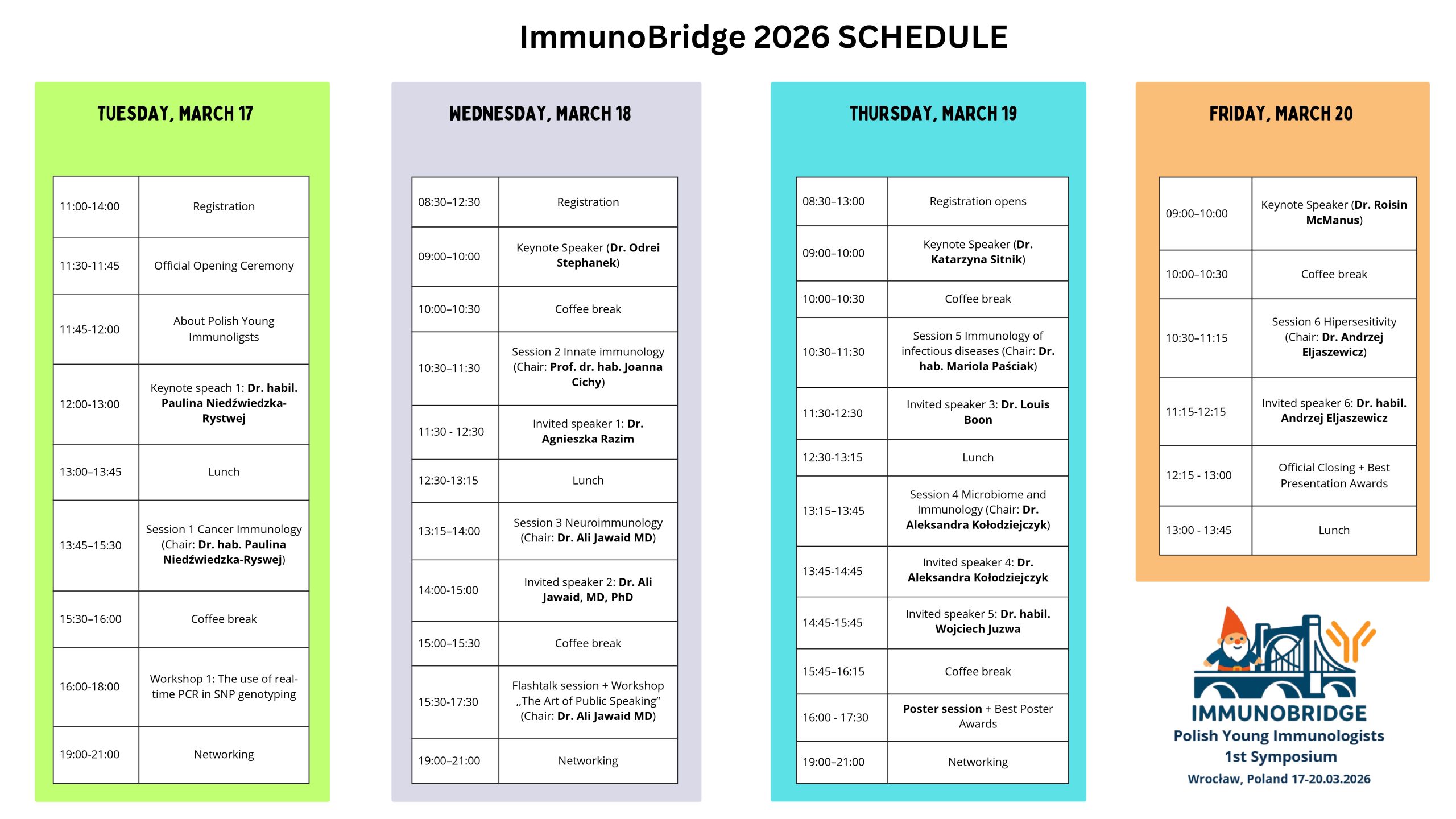
ImmunoBridge 2026 Schedule (PDF)
ImmunoBridge 2026 detailed schedule (PDF)

,,The Art of Public Speaking”
Workshop description
(Part 1) How to give a confident and compelling scientific presentation
(Part 2) The art of scientific story telling on print and social media
Scientific communication is perhaps the most important aspect of a scientific career, which unfortunately is also the least emphasized in training. Effective presentation skills are part and parcel of a scientist’s life; from baby steps (your ‘brainbee’ presentation) to the ultimate glory (your Nobel prize lecture). The last decade has also brought about a diversification in the scientific presentation formats with the emergence of pitch talks, blitz talks, chalk talks, and of course the COVID-ed complication of giving all these talks online. Finally, #scicomm has witnessed the transformation of a Stanford professor (Andrew Huberman) to a Times-cover celebrity with 7 million followers. Of course, not everyone needs to be the next Huberman, but we all need to nurture our inner Hubermen and Huberwomen because social media is the largest platform for public outreach and is here to stay.
In this 2-hour long interactive workshop (divided into two parts), we will first cover a novel and effective approach to prepare and deliver scientific presentations using PAT (prepare, anticipate, target) and RAT (relax, articulate, translate) components. This approach will be individualized to different formats- large class format lectures, flash/pitch talks, and virtual talks. We will then have a special feature on communicating science through popular science magazines and social media.
The workshop is limited to a maximum of 30 participants.
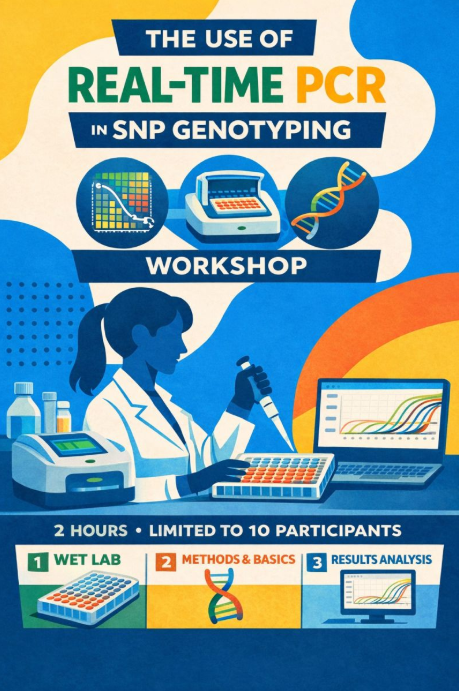 The use of real-time PCR in SNP genotyping
Workshop description
Single nucleotide polymorphisms (SNPs) are a type of DNA variation that involve only a single nucleotide position. They are the most common form of genetic variation, with many SNPs responsible for various common traits, but also for increased disease risk. There are various methods of SNP genotyping that can be used depending on the needs of the researcher. This workshop will focus on the use of real-time PCR in studying SNPs. The workshop will be divided into three parts: 1) a “wet lab” part, during which the participants will run the experiment themselves, 2) presentation of the methods and basics behind SNP genotyping and research, 3) analysis of genotyping results generated in the first part of the workshop.
The workshop will take 2 hours and is limited to 10 participants.
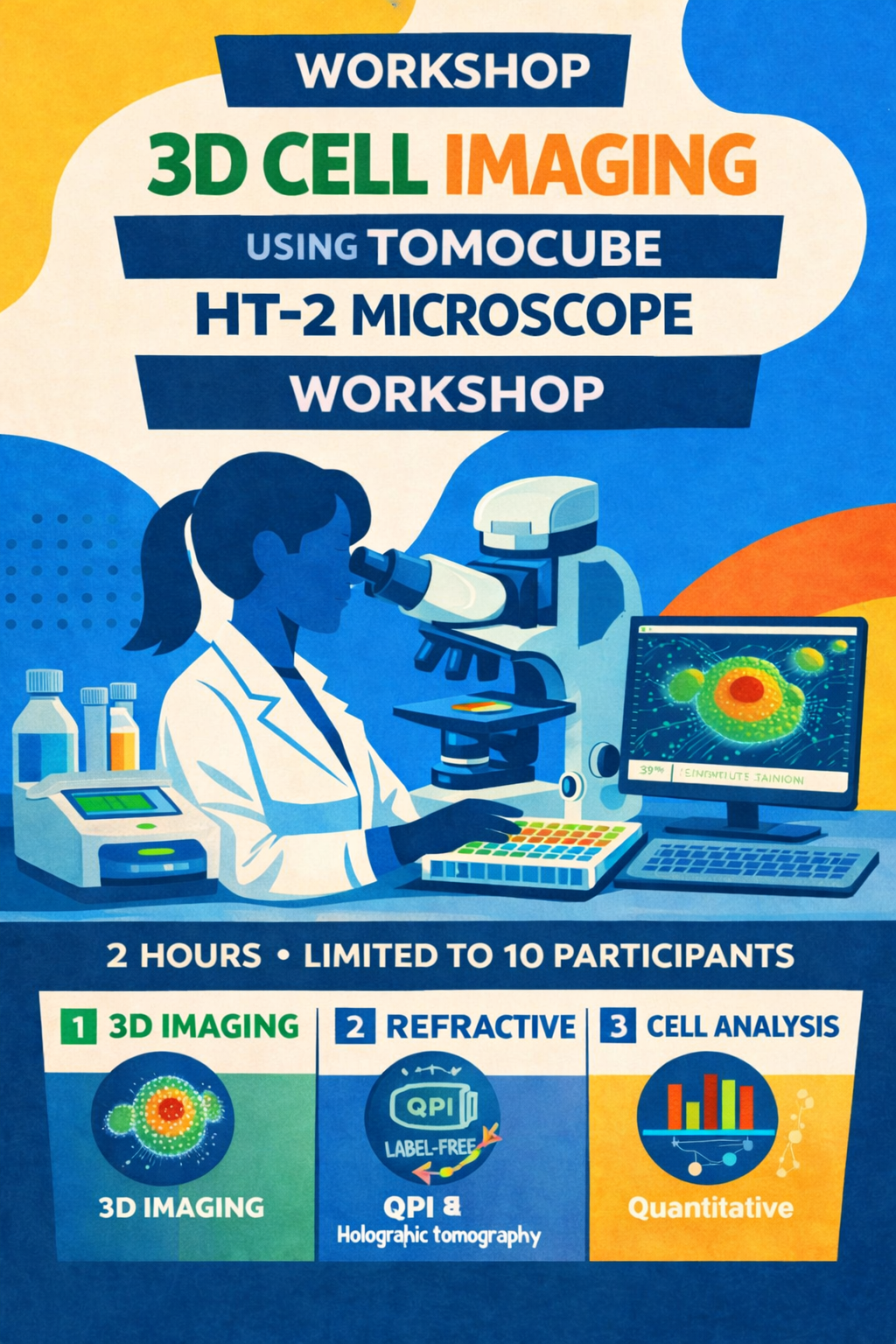
Workshop: 3D Cell Imaging Using the Tomocube HT-2 Microscope
This hands-on workshop will be held as part of ImmunoBridge 2026 and is dedicated to advanced methods of three-dimensional cell imaging.
Participants will be introduced to the principles and practical applications of the Tomocube HT-2 microscope, an advanced, label-free 3D imaging system based on quantitative phase imaging (QPI) and holographic tomography. The workshop will demonstrate how this technology enables high-resolution, three-dimensional imaging of live cells without the need for staining, using differences in the refractive index to visualize cellular structures.
In addition to imaging, the workshop will cover quantitative analysis of cellular parameters, a feature that distinguishes Tomocube HT-2 from conventional microscopy systems.
This workshop offers a unique opportunity to gain hands-on experience with the only Tomocube HT-2 system available in Poland, making it a valuable learning experience for researchers interested in advanced cell imaging techniques.
Participants are invited to join this session during ImmunoBridge 2026 to explore state-of-the-art approaches to live-cell 3D imaging.